MONTANA HOPPERS
The Princess and the Brute
by Skip Morris
(photos by Carol Ann Morris)
*Click on any photo to enlarge it and to see all photos in sequence*
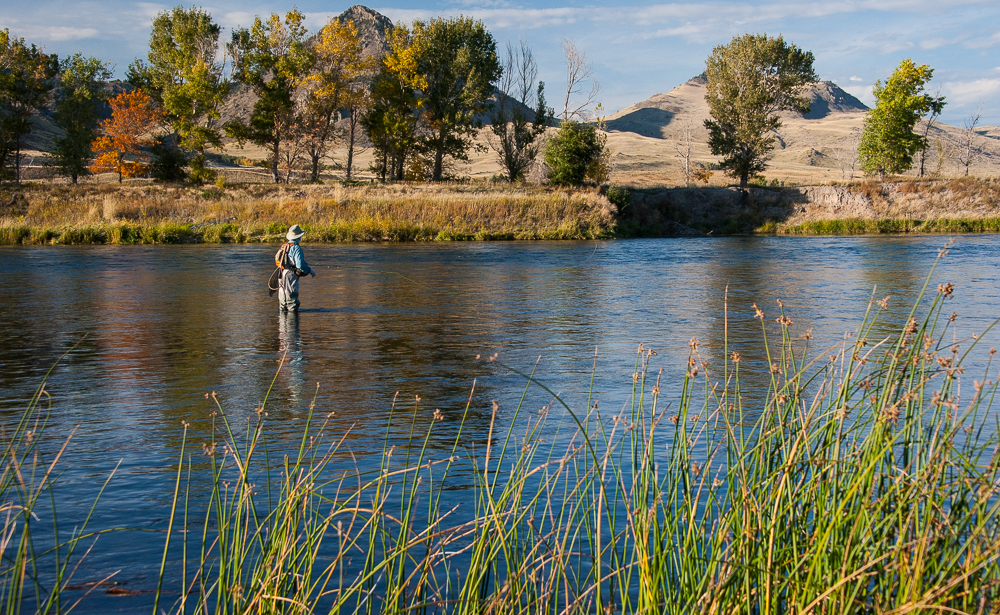 © Carol Ann Morris
Montana Hoppers, The Princess and the Brute - I couldn't resist giving this piece a few more rewrites after it came out in Big Sky Journal. So here it is, changed only a little.
 ©Carol Ann Morris
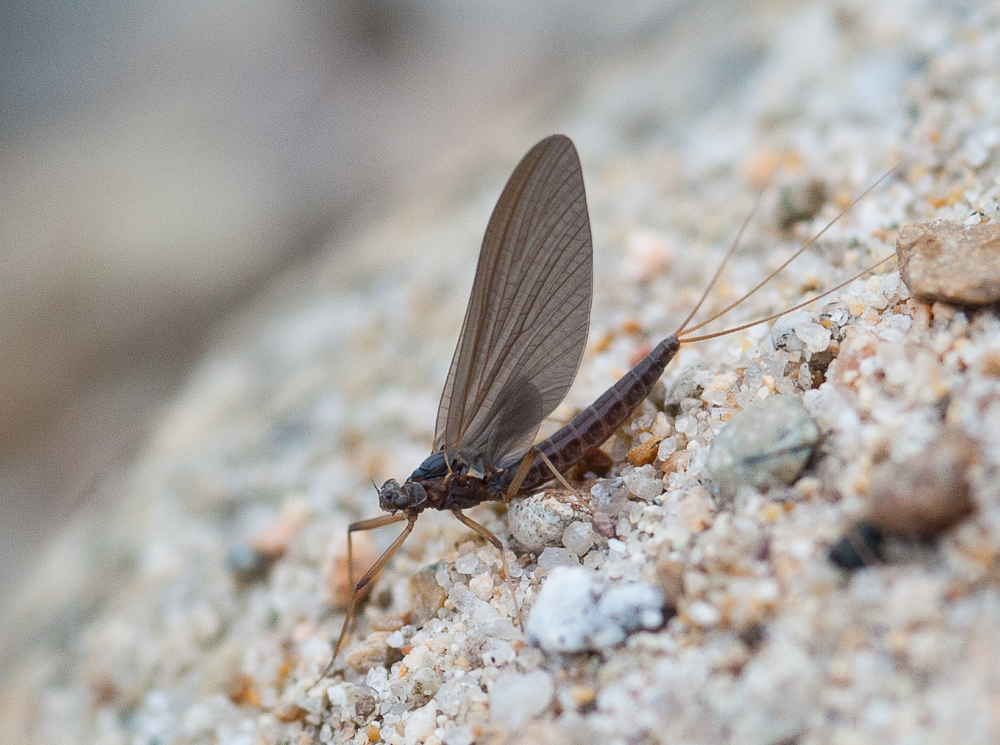
The chief problem for the grasshopper, in terms of its status among fly fishers, is the mayfly. The mayfly: delicate, slender, standing quietly on a river, the soft peaks of its full wings angling high, the insect that to trout-steam fly fishers embodies all that is refined, is poetical about their grand sport.
 ©Carol Ann Morris
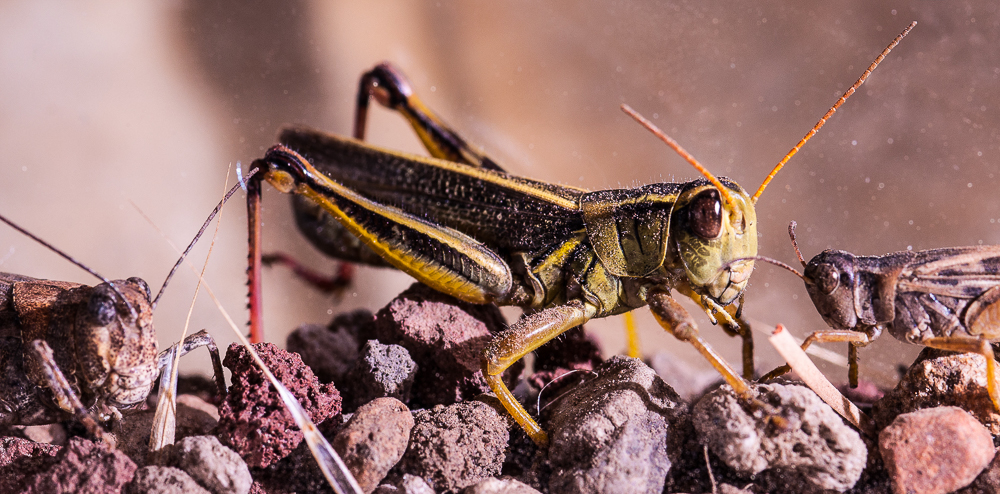
The grasshopper: chunky, jittery, a clumsy brute, violent in its leaps and its landings.
To fish a hatch of mayflies is to lightly and precisely cast a wispy fly to feeding trout whose noses rise softly just above water and disappear, over and over, subtracting from the flotilla of drifting beauties. (A "hatch," in fly fisher's lingo, is a migration of identical insects, of any sort, from their long lives underwater up and out to free their new wings and rise into the air.)
Grasshoppers don't hatch. And grasshopper fishing lacks all the grace and buoyancy of a mayfly hatch. Grasshopper fishing is slamming a beefy fly onto water in hopes a trout will savagely rush it. A drunken brawl. But whatever it lacks in grace and refinement, grasshopper fishing does not lack in excitement.
All due deference to the mayfly and the fascinations of its fishing, its fishing is rarely as wild-eyed exciting as the vicious right cross a trout often gives a grasshopper fly. I've watched trout execute this pugilistic move on both grasshoppers and the flies they inspire many times through my long career as a fly fisher, and most of my hopper fishing—though I've practiced it in Oregon, Idaho, Colorado, California, and Canada—has been in Montana.
Late Summer, Early Fall: Hopper Time
A Montana trout stream in July, August, or September can be a wonderful place to be a fly fisher when hoppers are around. Some Montana years are big hopper years. You know you've come during a big year when grasshoppers fidget before you on small-town sidewalks, on fishing trails that cut through grasses, even along the path to your rental place. A hopper turns in jerky movements of its little forelegs and deer-thighed hopping legs as you come near; then it stops, seems to tense, and when you're just close enough to grab for it, springs high and away. Maybe its wings open out dark against the tan grass and against its own body of perhaps a yellowy tan. The hopper doesn't know you and doesn't want to and certainly doesn't want to be caught by you.
But you do want to catch it.
You want to catch it to check its size, the color of its stumpy body, so you can match that color and size in your fly. If you do catch the grasshopper it struggles and surprises you with its powerful kicking. It doesn't like you, it spits sour tobacco juice on your fingers.
The tobacco juice stains your skin, and the grasshopper is frustratingly difficult to capture, nearly always just beyond your grasp: an annoying insect.
Yet it has its appeal. As insects go in general, most grasshoppers are sort of handsome, a hulking dairy-bull sort of handsome, in their complexity of colors and markings, in their symmetry. But that varies because there are many kinds of grasshopper—according to the National Audubon Society Field Guide to North American Insects & Spiders there are 1,000 species of grasshopper and cricket (both insects belong to the order Orthoptera) in North America. (May we assume that's a rounded-off number?) Some hoppers, to my eye, really are plain ugly. There's a great dusty looking and blobby one that offends me in particular. It looks as though it were carved from a bar of creamy gray soap.
Grasshoppers: A Big Meal in One Bite
 ©Carol Ann Morris
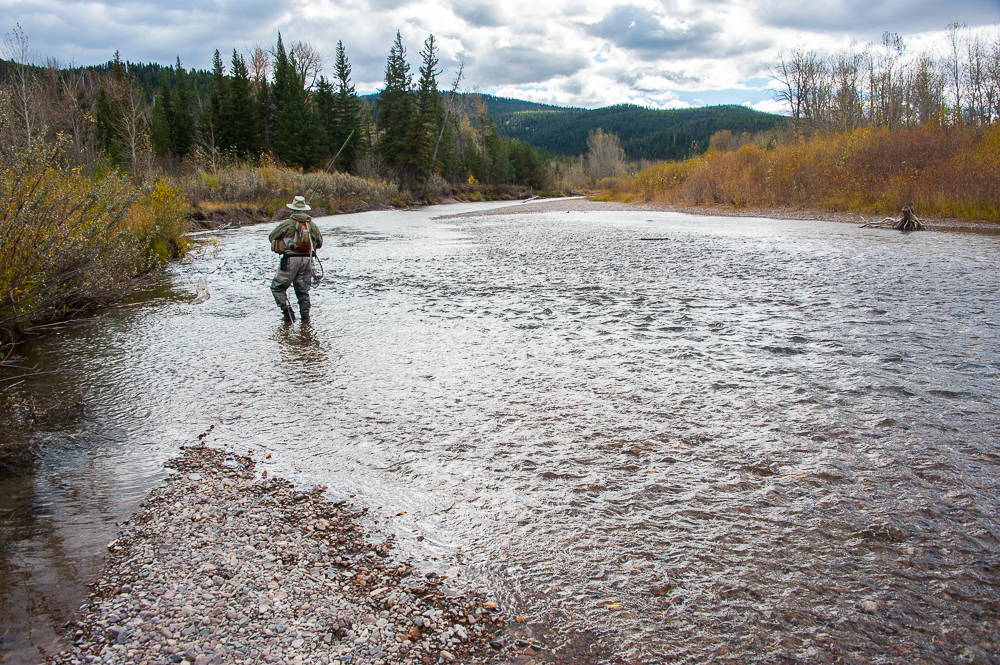
Flies that imitate grasshoppers are another matter: they're never annoying and nearly always intriguing and impressive. It takes a lot of the fly tier's fluff and hair and fur and whatever else to make a trout fly as big and chunky as a grasshopper and that carries the shape and key features of one.
Size is the grasshopper's finest quality from the fly fisher's perspective. And from the trout's. (Though I suppose it's possible trout would rank grasshopper flavor over size. I'll never know, because I will never—I swear it to God—taste one.) That graceful mayfly we saw earlier is but a nibble compared with the feast that is a grown hopper. Of the stream-born insects trout eat and fly fishers commonly imitate with their flies—the mayfly, of course, and the caddisfly, the stonefly, the midge—only a very few of the stones and one caddis can match the meat-serving of an average-size grasshopper. A floating hopper can inspire a big trout, one that has nearly given up the practice of feeding at the predator-risky top of the water, to charge up with murderous intent. Fly fishers know this, and thus the grasshopper earns from them its clunky respect.
Fishing Grasshopper Flies: Big Banks and Tall Grass
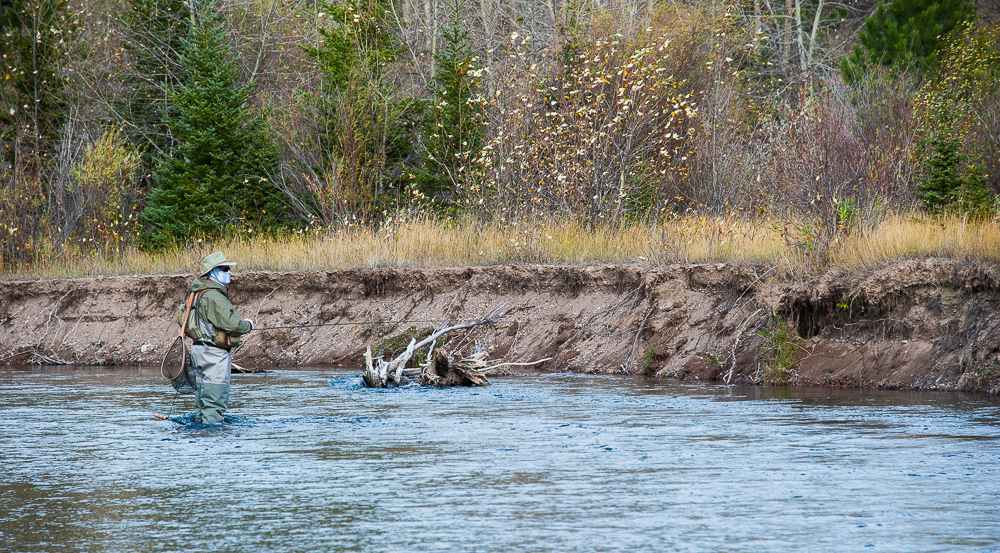
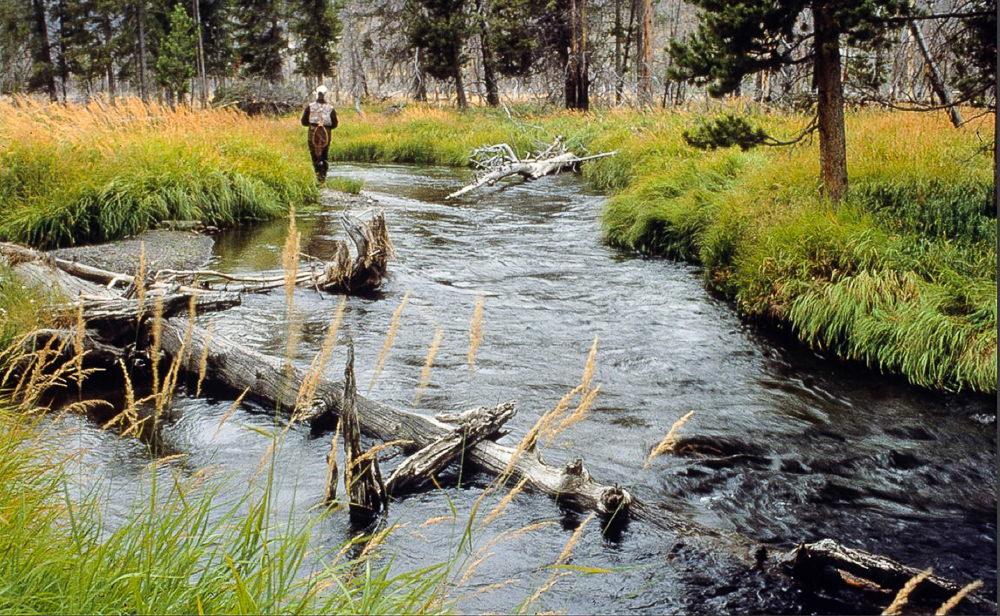
Grasshopper fishing usually goes something like this. It's midsummer and you're looking up a Montana trout stream that winds down to you through banks of tall grass. The chill of high-altitude night is about gone and now hoppers that were quiet an hour ago leap and soar in their limited flight—one springs up near, then one farther away, sporadic action heightened whenever a breeze comes up to stir the insects into action.
 ©Carol Ann Morris
Soon you're kneeling in shallows just down- and across-stream from a corner where water dark with depth slows against a grass-furred bank, a bank sculpted by high-water times to a steep drop of about three feet. You swing the line up and back, pause, and punch it forward to snap the big fly out. It drops above the dark water, where you want it. You can see the fly about forty feet upstream. It bounces down on light ripples of current, but only through memory and imagination can you see its head of deer hair, packed and razor-shaped to the clean look of carved wood, its great legs of dark pheasant-tail fibers knotted to angle as though jointed.
 ©Carol Ann Morris
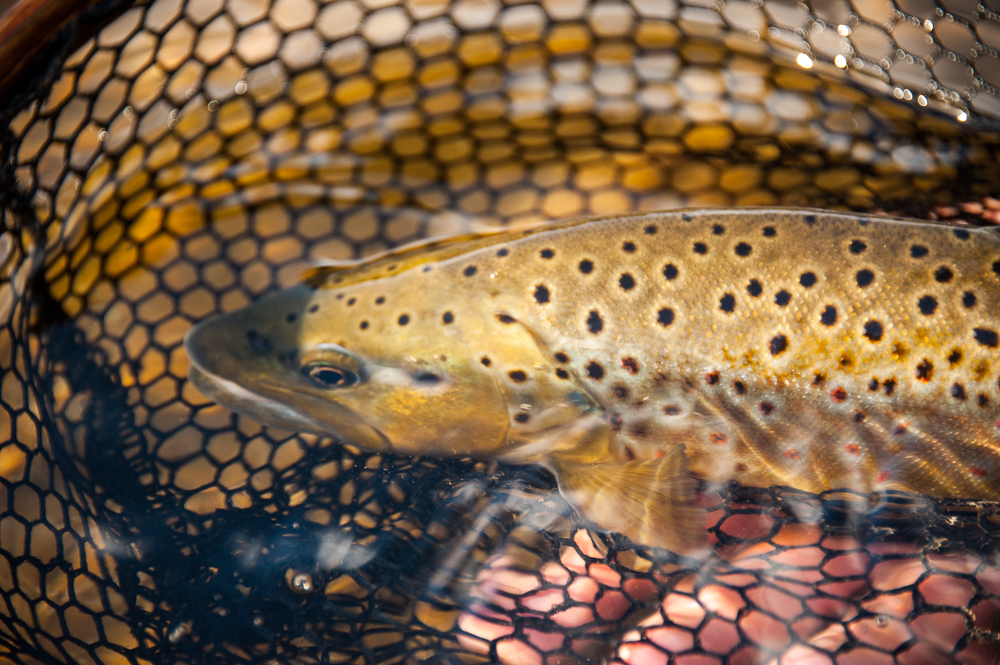
Your eyes, in actuality, do see the head of a three-pound brown trout burst from the water at the bobbing fly. You pause, to let the trout close its jaws on the thing, and then you give the line a sharp tug to sink in the hook.
The battle is on!
 ©Carol Ann Morris



Click here to hear Skip's interviews on popular podcasts...

Click here to hear Carol's interview on AskAboutFlyFishing.com...
Click here to hear Carol's interview with Christian Bacasa on the Fly Fishing Insider Podcast...
*Announcements*
 ©Carol Ann Morris
Click here: Read Skip's essay from Big Sky Journal, Montana Hoppers: The Princess and the Brute...
Skip's latest books:
New Fly Fishing Essay Book Release, July 2026:
Imposters: The Flies We Fish and the Fish They Catch is on Amazon...

Click here: Imposters...
Morris & Chan on Fly Fishing Trout Lakes is on Amazon as an e-book...
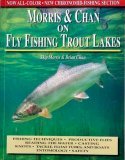 Morris & Chan on Fly Fishing Trout Lakes
Click here: Morris & Chan on Fly Fishing Trout Lakes e-book...
Top 12 Dry Flies for Trout Streams: How, When, and Where to Fish Them, is on Amazon as an e-book...Click on the links below...
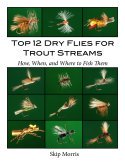 Top 12 Dry Flies for Trout Streams: How, When, and Where to Fish Them
Click here for more: Top 12 Dry Flies for Trout Streams: How, When, and Where to Fish Them...
Top 12 Nymphs for Trout Streams: How, When, and Where to Fish Them, 2nd Edition, is an e-book and a paperback.
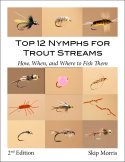 Top 12 Nymphs for Trout Streams: How, When, and Where to Fish Them (2nd Edition)
Click here for more info: Top 12 Nymphs for Trout Streams: How, When, and Where to Fish Them (2nd Edition)
Click here for more info: Skip's e-book of fly fishing essays (chronicling 50 years of adventure on the water)
500 Trout Streams...
500 Trout Streams...
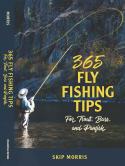 365 Fly Fishing Tips for Trout, Bass, and Panfish
Click here to get more info:
365 Tips for Trout, Bass, and Panfish...
365 Tips for Trout, Bass, and Panfish...
Print Skip's chart for FREE:
Skip Morris's Trout-Fly Proportion Chart
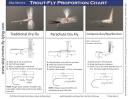
Go to Skip Morris's Trout Fly Proportion Chart
Skip's Predator is available to buy...
Skip's ultra-popular Predator—a hit fly for bluegills, other panfishes, largemouth bass, smallmouth bass, and trout—is being tied commercially.
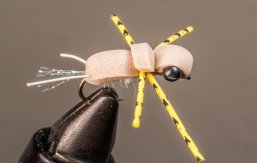
The Predator
CLICK HERE to learn more about the Predator...
Learn to Tie Skip's Predator
Do you want to tie the Predator?
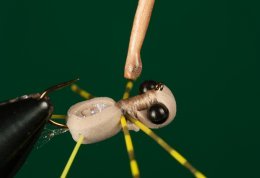
Tying the Predator
Skip shows you how to tie it on his YouTube Channel link, listed below:
CLICK HERE to see Skip's detailed video on how to tie the Predator...